Others may baulk at the challenge of raising funding for a public health organisation at a time when donors and philanthropists are either tightening their belts to keep up with growing demand, or scrapping traditional, much-relied-on funding vehicles.
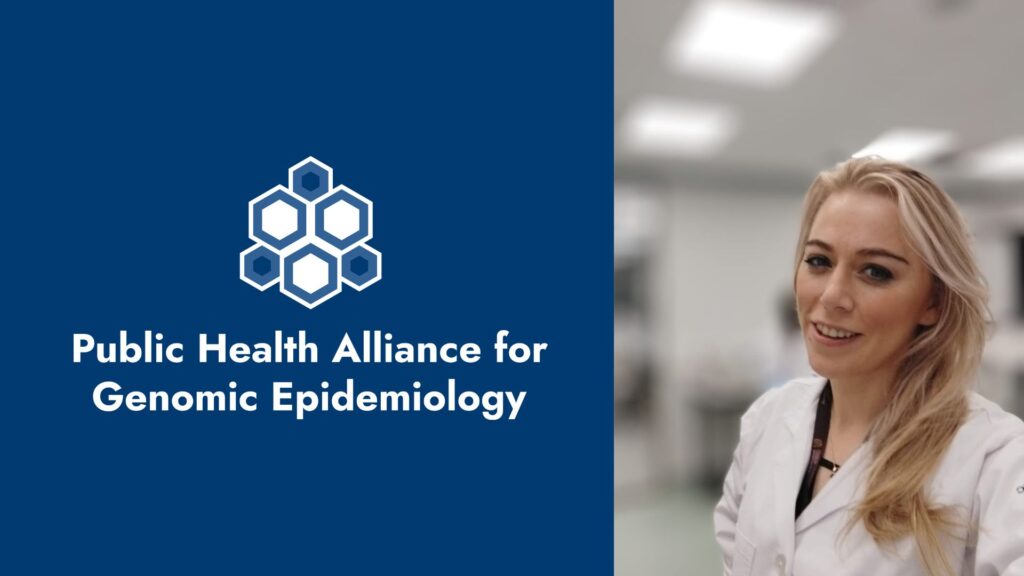
Not so Dr Stephanie van Wyk.
When Prof Alan Christoffels, chair of the PHA4GE steering committee, approached her to lead the organisation’s nascent funding committee, she jumped at the opportunity. Rather than waver, she saw the position as an opportunity to explore some novel approaches, and to come up with some new ideas.
A molecular biologist and bioinformatician by training and vocation, Van Wyk currently serves as a senior researcher and lecturer with the Collaborating Centre for Optimising Antimalarial Therapy (CCOAT) at South Africa’s University of Cape Town (UCT). Here, her research is largely focused on malaria, specifically the malaria parasite’s increasing resistance to anti-malarial drugs, and decoding the disease’s perplexing genetics. Previously, she had a decade-long stint with the Forestry and Agricultural Biotechnology Institute in Pretoria, was part of the Stellenbosch University team that identified the SARS-CoV-2 Omicron variant, and spent time in the UK on a postdoctoral research fellowship.
But as most researchers are obliged to do today, Van Wyk has occasionally had to sit down with a funding application. That has familiarised her with the changing public-health funding landscape, especially in Africa, still reeling from the sweeping withdrawal of funding opportunities from the US government.
“One of the biggest crises we’re facing in public health research is the reallocation of funding, and the sciences and research institutions are not being funded,” she acknowledges. “At the same time, we are facing more public health crises and increasing disease outbreaks.”
But Van Wyk is not put off by these challenges. Rather, these developments present an opportunity for individuals and organisations to band together. For different players in the research sectors to break down old, outdated silos. And to build research capacity and identify new ways to bolster funding from within.
“This is an opportunity to look at this landscape very differently, and for people from different institutions or different contexts to have new conversations,” Van Wyk says. “And PHA4GE, because it sits outside of traditional structures and outside of any one institution, and doesn’t have to get stuck along old pathways.”
It is this can-do sensibility that first impressed Christoffels. And convinced him that Van Wyk would be the right person to lead PHA4GE’s fundraising drive.
“Dr van Wyk is an active malaria researcher who has an impressive track record for securing funding,” says Christoffels. “She was enthusiastic when we had an exploratory meeting, and I was convinced then that she would inject fresh enthusiasm into the funding committee. And lead it.”
Van Wyk was quickly thrown into the deep end. Without much ado, she was working alongside committee members – Michael Bridger, Dr Tracey Calvert-Joshua, Rangarirai Muzite-Matima, and Jamie Southgate of the PHA4GE Secretariat – and its recent postdoctoral appointments, Dr Palesa Makoti and Dr Rekha Sathyan, on two funding applications. She is full of praise for her fellow committee members.
They’re also the right people, she says, to keep PHA4GE’s ear to the ground as the organisation looks to explore new funding opportunities.
“As a researcher and just as a practical South African, I know, as does the rest of the committee, that the funding landscape is changing, and you have to be flexible and be able to adapt.”