
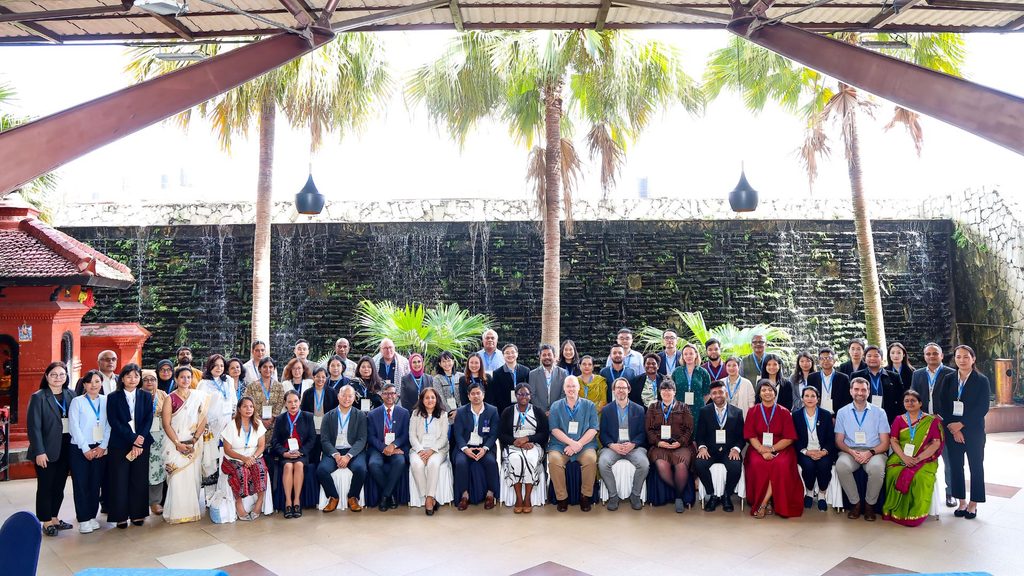
An Asia-Pacific Region meeting of the WHO has highlighted the challenges that countries there, and across the globe, are facing in managing genomic data.
Pathogen genomics is facing a problem of its own competence.
In the Western Pacific Region, for example, in-country sequencing capacity has grown from 11 countries in 2021 to 15 in 2025, with the target of 20 set for 2029. In South-East Asia, national sequencing capacity is now in place in nine of the region’s ten countries, with applications expanding well beyond SARS-CoV-2 to influenza, mpox, dengue, antimicrobial resistance, tuberculosis, Nipah virus and foodborne pathogens.
On the back of this new capacity, a networked model in India, which incorporates high-performance computing, slashed analysing time from nearly 18 hours to under two. Likewise, the Philippines was able to quickly recalibrate their response measures when rapid whole-genome sequencing found that a suspected outbreak of glanders, an infectious zoonotic disease that affects largely horses, mules and donkeys, was, in fact, a case of melioidosis, an infectious human disease caused by the bacterium that is passed on in contaminated soil or water.
The issue now facing the region is that of data.
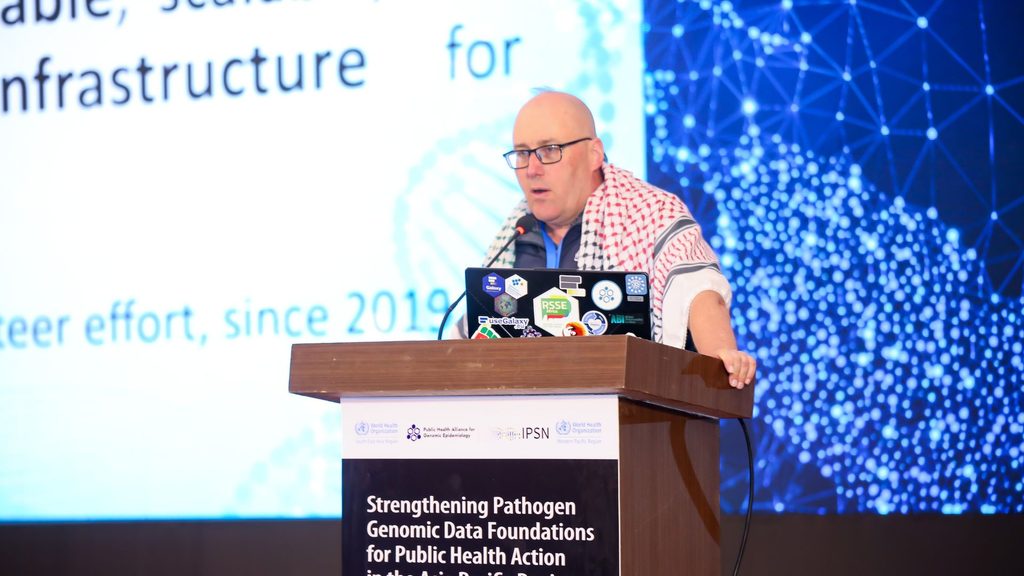
Also elsewhere, countries have to figure out how to manage and make best use of the data coming out of its facilities, argued Professor Torsten Seemann of the University of Melbourne, Australia, in his keynote delivery at a three-day meeting of the Asia-Pacific Region hosted by the World Health Organisation (WHO) in Kathmandu, Nepal, from 29 September to 1 October 2026. “The value of pathogen genomic surveillance depends not only on the ability to generate sequence data, but on how genomic and associated data are structured, managed, maintained, linked, stored and shared across the full data life cycle,” Seemann said.
Seemann highlighted the need for more relational databases and laboratory information management systems to cope with the growing volume and complexity of data. One major obstacle, however, is that bioinformatics and data-management positions remain largely project-funded, creating long-term sustainability issues.
These concerns were echoed in the sessions on metadata standards and governance, with a call for shared meaning, structure and minimum requirements for exchanged data.
The meeting concluded on a promising note, however, reports Peter van Heusden of the South African National Bioinformatics Institute (SANBI), with seven consolidated recommendations coming out of the event. These are to (1) establish national genomic surveillance governance and strategies; (2) design surveillance around defined public health use cases; (3) strengthen interoperability and responsible data exchange; (4) institutionalize quality assurance and reproducible workflows; (5) build and retain a multidisciplinary workforce; (6) secure sustainable data infrastructure; and (7) to use regional networks and coordinated partner support to accelerate progress.
As a part of the meeting, Van Heusden and fellow PHA4GE members Dr Emma Griffiths, Charlie Barclay and Daniel Fornika – all of the Centre for Infectious Disease Genomics and One Health (CIDGOH) at Simon Fraser University, Canada – ran a workshop on infrastructure and data standards/interoperability.