
A recent malaria molecular surveillance meeting in Uganda highlighted two things – (one) how critical advances in genomics and gene sequencing can be in the fight against killer diseases, including malaria, but also (two) how much those advances rely on underlying data.
And data took centre stage at the three-day meeting, hosted in Kampala in early June by PHA4GE and the Africa Pathogen Genomics Initiative (Africa PGI) of the Africa Centres for Disease Control and Prevention (Africa CDC). Specifically, the gathering focused on data standards for the molecular surveillance of malaria, as well as analysis tools and data sharing for public health.
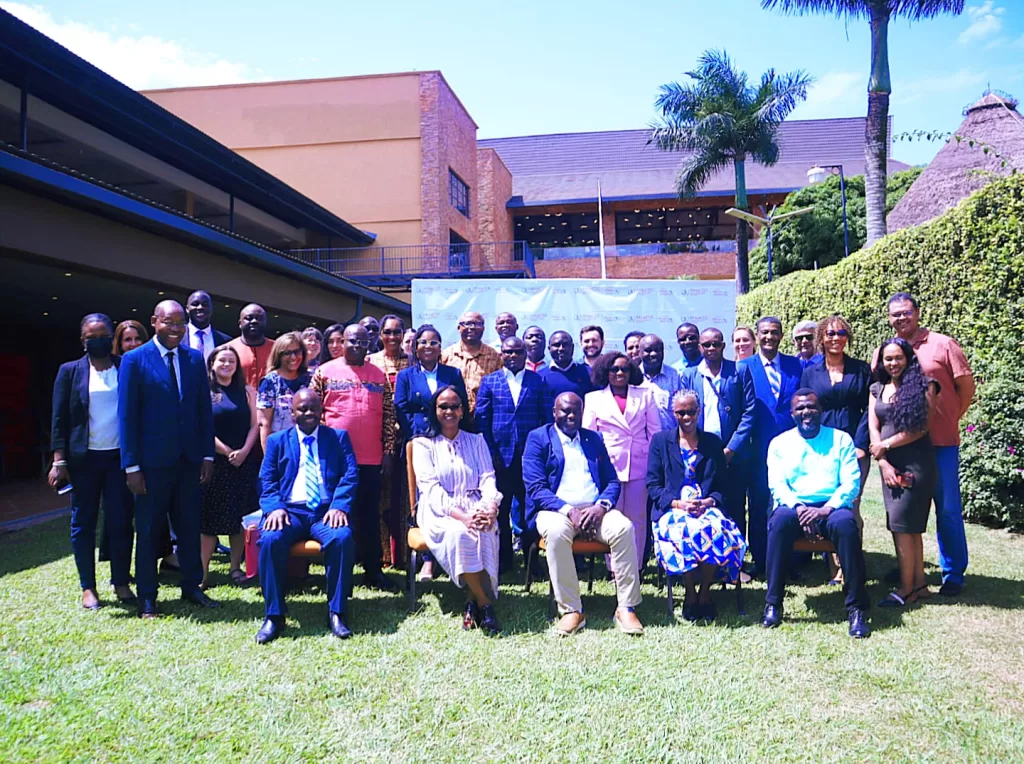
The event drew participants from across the globe, including from national malaria programmes and public health laboratories in Africa.
While some underlying challenges were highlighted, there was also a consensus at the gathering that the standardisation of data for malaria genomics, especially in the era of mass sequencing, is key to efforts to stop the disease. One participant, Kathryn Murie, an associate specialist with the Experimental & Population-based Pathogen Investigation Center (EPPIcenter) at the University of California San Francisco, drew a notable comparison with a messy cupboard that needs sorting.
But setting the tone for the meeting were opening presentations by Professor Alfred Ngwa of the London School of Hygiene & Tropical Medicine and Professor Charles Wondji of the Liverpool School of Tropical Medicine. They spoke, respectively, on what’s known about the genetic make-up of the malaria parasite (a lot) and (less so) the mosquito vectors.
But much of the meeting was dedicated to debating and deliberating on the challenges facing data standardisation in the African context. Those challenges include concerns about data sovereignty, the sensitivity of genomic data and associated metadata, and the long-term sustainability of infrastructure, as well as shortcoming in funding and even trained personnel to maintain systems, explained Dr Eddie Lulamba of the South African National Bioinformatics Institute (SANBI), and a member of the PHA4GE data structures working group.
“The challenges in Africa originate from a combination of infrastructure limitations, lack of standardisation awareness, policy barriers, and underinvestment in local capacity,” summed up Lulamba.
But despite these challenges, and the lengthy discussions, at least one participant left Kampala confident that there is momentum in data standardisation. “I have to admit that when I came to this meeting, I hadn’t fully appreciated the complexity of the different data layers,” reported Professor Alan Christoffels, PHA4GE chair.
“But this meeting has started to shape our thinking about next steps, and how we create solutions or interventions that can be actionable – that for me is a big one. And so I’m very much looking forward to a discussion with each of the laboratories in trying to see to what extent they can help to shape or even co-create the technical specifications that will be developed before the end of this year.”
That process will be led by the various national malaria control programmes, whose representatives will chair the working groups that will drive the next steps.