Driver Project

AMR

Antimicrobial resistance (AMR) is one of the most urgent global health threats, undermining effective treatment of infectious diseases. Genomic epidemiology offers critical tools to track resistance, guide treatment, and inform public health strategies. PHA4GE’s AMR group, a sub-working group of the Data Structures Working Group, brings together global collaborators to develop standards and tools that ensure AMR genomic data is interoperable, reproducible, and actionable.

Problem Statement

Efforts to leverage genomic data for AMR research are hampered by fragmented data structures, inconsistent nomenclature, and a lack of harmonisation across databases. Local treatment guidelines are rarely encoded into research frameworks, and laboratory antimicrobial susceptibility testing (AST) data often remains siloed in non-standardised formats. Without shared standards and quality control measures, AMR genomic data cannot fully support effective surveillance, clinical decision-making, and global knowledge exchange.

Working Groups

Implementation Framework

PHA4GE, through its Working Groups is coordinating efforts to:

Data Structures for AMR Interpretation

AST Standardisation

Treatment Guidelines Encoding

Database Cross-Mapping

Gene Nomenclature

Genomics Quality Control

Through these coordinated efforts, PHA4GE is building the standards and tools needed to strengthen AMR genomics for both research and public health action worldwide.

Resources

This publication describes the development of a standardized output specification and the hAMRonization tool to harmonise antimicrobial resistance (AMR) detection results across diverse bioinformatic tools. Developed with international public health laboratories, hAMRonization enables interoperable, unified AMR reporting and supports scalable integration into genomic surveillance workflows.


PHA4GE has developed an AMR gene detection output standard to address inconsistencies across existing tools and reference databases. Supporting parsers and automated pipelines enable harmonised outputs, benchmarking, and improved reuse of AMR surveillance data.

The Public Health Alliance for Genomic Epidemiology (PHA4GE) together with CLIMB-BIG-DATA and the Joint Programming Initiative on Antimicrobial Resistance (JPIAMR), delivered a Workshop on Antimicrobial Resistance on 15th October 2021.

Related Links

We're excited to announce episode 12 of the PHA4GE Genomic Horizons webinar series, featuring a talk by Dr. Su Datt Lam from the National University of Malaysia!

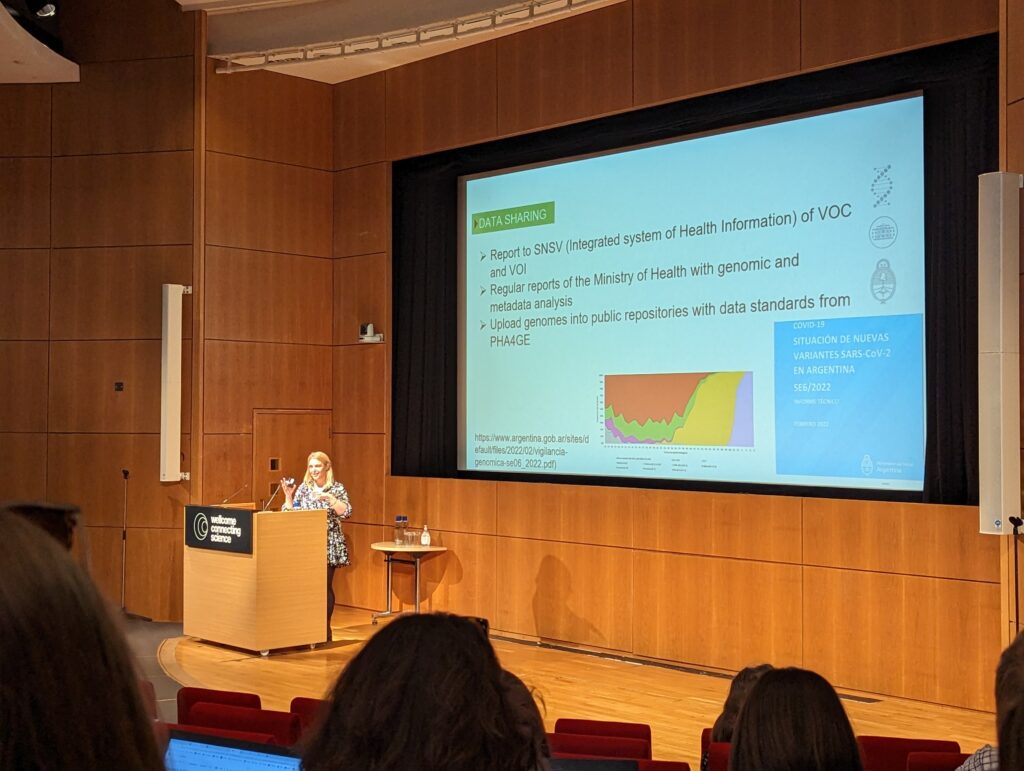
In the realm of public health genomics, Argentina has made significant strides in recent years, thanks to the efforts led by Josefina Campos and her team at ANLIS–Dr. Carlos G. Malbrán.

Antimicrobial resistance (AMR) falls in the top 10 category of public health threats. According to the most recent estimates, 4.95 million deaths were associated with bacterial AMR in 2019 and was therefore the third largest cause of mortality globally.