PHA4GE’s Principal Investigator Professor Alan Christoffels recently spent another intensive, and cold, week at the World Health Organisation (WHO) headquarters in Geneva, Switzerland, where he was a member of the South African delegation participating in international negotiations around the sharing of data on disease-causing pathogens and access to benefits.
Springing from challenges experienced in the sharing of such data over the COVID-19 pandemic, the WHO developed its WHO Pandemic Agreement, an international accord that looks to “enhance global prevention, preparedness, and response to future pandemic threats”. The Agreement was formally adopted in May 2025.
But some elements of the Accord are still being trashed out, notably the Pathogen Access and Benefit Sharing (PABS) annex.
The PABS annex is intended to ensure that the rapid sharing of pathogens with “pandemic potential” takes place on an equal footing. And, an issue highlighted by regions such as Africa and other parts of the global south, that there is a “fair and equitable sharing of benefits” that arise from the sharing of such data. Such benefits would include ready access to vaccines, diagnostics and therapeutics, which became bones of contention over the pandemic.
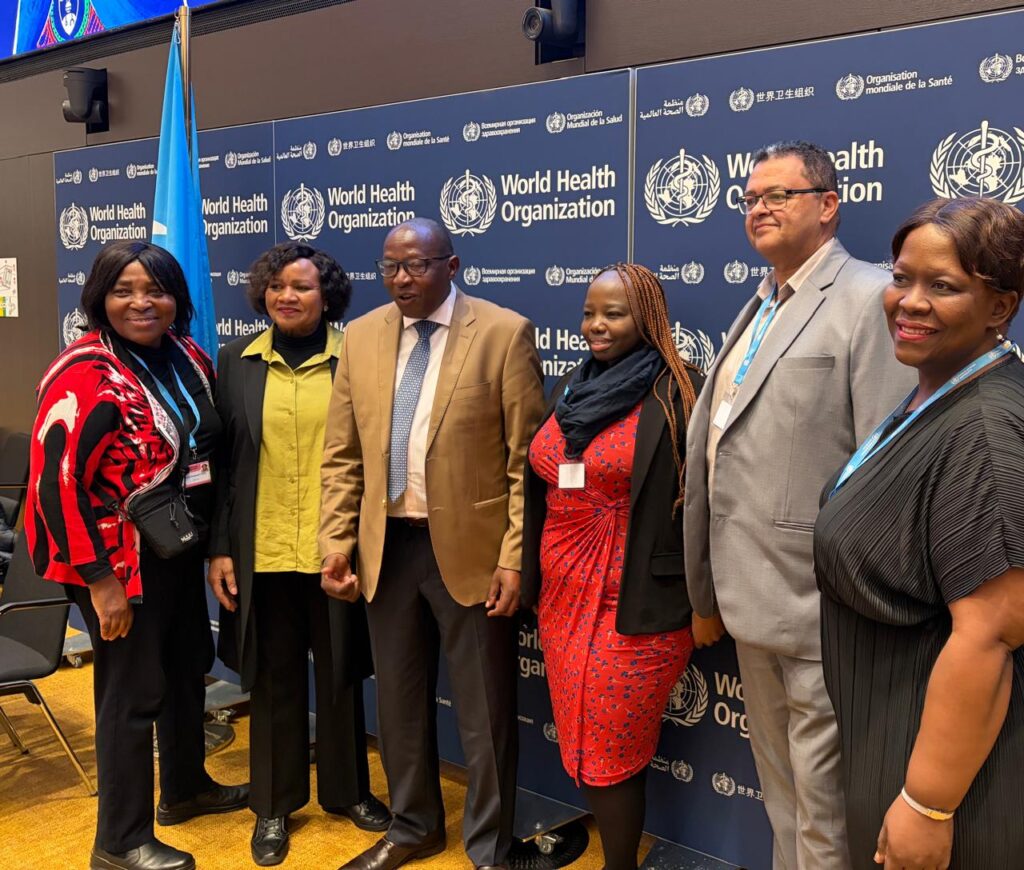
The latest PABS meeting in Geneva, which took place at the end of March under the purview of the WHO’s Intergovernmental Working Group (IGWG), was the sixth and supposedly final round of negotiations. Among the issues that occupied delegates were the definitions and distribution of access to pathogen data, benefits that emanate from the sharing of pathogen data, the contractual arrangements underpinning the PABS system, and the functioning of the system.
Unable to settle these matters, however, a seventh meeting will be held at the end of April.
It is encouraging to see that countries in the global south are aware of what is at stake to ensure that an agreement is reached by May 2026, says Christoffels, director of the South African National Bioinformatics Institute (SANBI) at UWC as well as advisor to the Africa Pathogen Genomics Initiative of the Africa Centres for Disease Control and Prevention (Africa CDC). “Whatever the final operational modalities will be, we need to ensure that data use is traced within the pathogen surveillance system so that the appropriate benefits can be accrued to the data-producing country.”
The Africa CDC and other international public health organisations were key to the expansion of genomics and other laboratory capacity across Africa. As a result, the continent’s ability to generate and share pathogen data increased dramatically over and since the pandemic.
“The contribution that African countries can make towards understanding, monitoring, and stemming pandemics has multiplied by several factors,” says Christoffels. “As a serious player on the global stage, it’s only fair that we become equal partners in benefitting from life-saving interventions that become essential over global disease outbreaks.”